
Disposable vapes create significant e-waste. Understand the environmental impact of high-puff-count devices, why recycling them is challenging, and how to dispose of e-cigarettes properly in Australia.
Quick answer
- You open a sleek, shrink-wrapped box and pull out a device with a futuristic design, complete wit...
- Overview
- The Scale of the Disposable Vape Waste Problem
- What Is Inside a High-Puff-Count Disposable Vape?
You open a sleek, shrink-wrapped box and pull out a device with a futuristic design, complete with LED touchscreens and the promise of 30,000 puffs. Every detail — from the first draw to the animated display — signals premium engineering. But as the screen lights up, a deeper question flickers beneath the surface: why do we, as consumers, so easily trade the long-term health of our environment for short-term convenience?
Overview
For conscientious adult vapers who appreciate modern technology but feel the weight of environmental responsibility, the balance is becoming harder to ignore. Ultra-high-capacity disposable devices have reshaped the market around sheer convenience, yet they leave behind an unprecedented trail of electronic waste. This article takes a clear-eyed, technical look at what happens when a 30,000-puff-class device runs dry — and why the recycling conversation matters now more than ever.
Disposability is a luxury our planet simply cannot afford.
The Scale of the Disposable Vape Waste Problem
The global disposable e-cigarette market has seen explosive growth in recent years. In Australia alone, millions of single-use vaping devices enter the waste stream each year. While many of these are compact low-capacity units, the emergence of 30,000-puff-class disposables introduces a new dimension to the waste challenge: fewer devices overall, but each one far more complex and materially intensive than its predecessors.
The scale is staggering. Consider that a single high-capacity device contains a lithium-ion battery, multiple printed circuit boards, LED or LCD displays, and a plastic housing engineered for durability — all designed to be discarded after one use cycle. When multiplied across thousands of users, the cumulative environmental burden is enormous.
Not all disposable vapes carry the same environmental weight, however. Mid-range devices such as the ALIBARBAR INGOT 9000 Puffs disposable vape, with its 2,400 mAh battery and streamlined construction free of complex digital displays, represent a category with a considerably lighter material footprint per unit. Understanding these differences is essential for making informed choices.
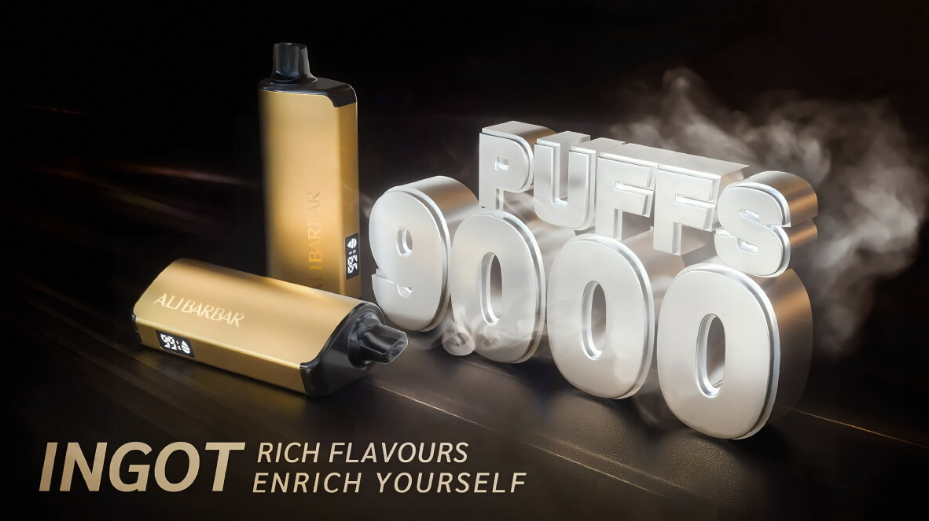
The ALIBARBAR INGOT 9000 delivers up to 9,000 puffs in a streamlined, single-piece design with a 2,400 mAh battery.
What Is Inside a High-Puff-Count Disposable Vape?
To understand why recycling these devices is so difficult, it helps to look beneath the exterior shell. The 30,000-puff-class disposables now appearing on the market are a far cry from the simple tube-style vapes of a decade ago. A detailed technical breakdown reveals multiple layers of diverse, tightly integrated components:
- Plastic outer casing: Typically made from polycarbonate (PC) and ABS plastics — high-durability materials that require hundreds of years to break down in the natural environment.
- Advanced electronic assembly and displays: A main PCB with microprocessors, airflow sensors, and LED or LCD screens. These components depend on precious metals and rare-earth elements for their manufacture.
- Lithium-ion battery: The power core that supports repeated USB-C recharging so the entire e-liquid reservoir can be consumed. Contains lithium, cobalt, nickel, and other heavy metals.
- Heating chamber and e-liquid reservoir: A metal coil (often dual-mesh) bonded to synthetic absorbent wicking material, which retains residual e-liquid even after the device stops producing vapour.
The greatest chemical hazard lies in the residues. E-liquids contain concentrated nicotine, flavourings, and organic compounds. When a device is improperly discarded in general waste and ends up in landfill, these substances — along with heavy metals leaching from damaged batteries and electronics — can freely migrate into soil and groundwater, contaminating local ecosystems.
Every discarded vape is a miniature toxic-waste factory sealed inside a plastic shell.
Comparing the Environmental Footprint: Small vs. Large Disposables vs. Refillable Systems
Not all vaping products are equal when it comes to environmental impact. To illustrate the material and waste differences, the table below compares three common device categories — standard small disposables, ultra-high-capacity disposables, and refillable pod systems — normalised to the equivalent of 30,000 puffs.
| Metric | Standard Small Disposable (~600 puffs) | Ultra-High-Capacity Disposable (~30,000 puffs) | Refillable Pod System |
|---|---|---|---|
| Devices needed for 30,000 puffs | 50 units | 1 unit | 1 device + 10–15 replaceable pods/coils |
| Batteries discarded | 50 (often non-rechargeable) | 1 lithium-ion cell | 0 (same battery serves for months) |
| Electronic waste (PCBs, displays) | Very high (50 simple circuit boards) | Moderate (1 advanced PCB + display screens) | Minimal (no electronics in replaceable pods) |
| Refillable | No | No | Yes (e-liquid can be refilled repeatedly) |
| Long-term carbon footprint | Extremely high | Moderate | Low (when amortised over device lifespan) |
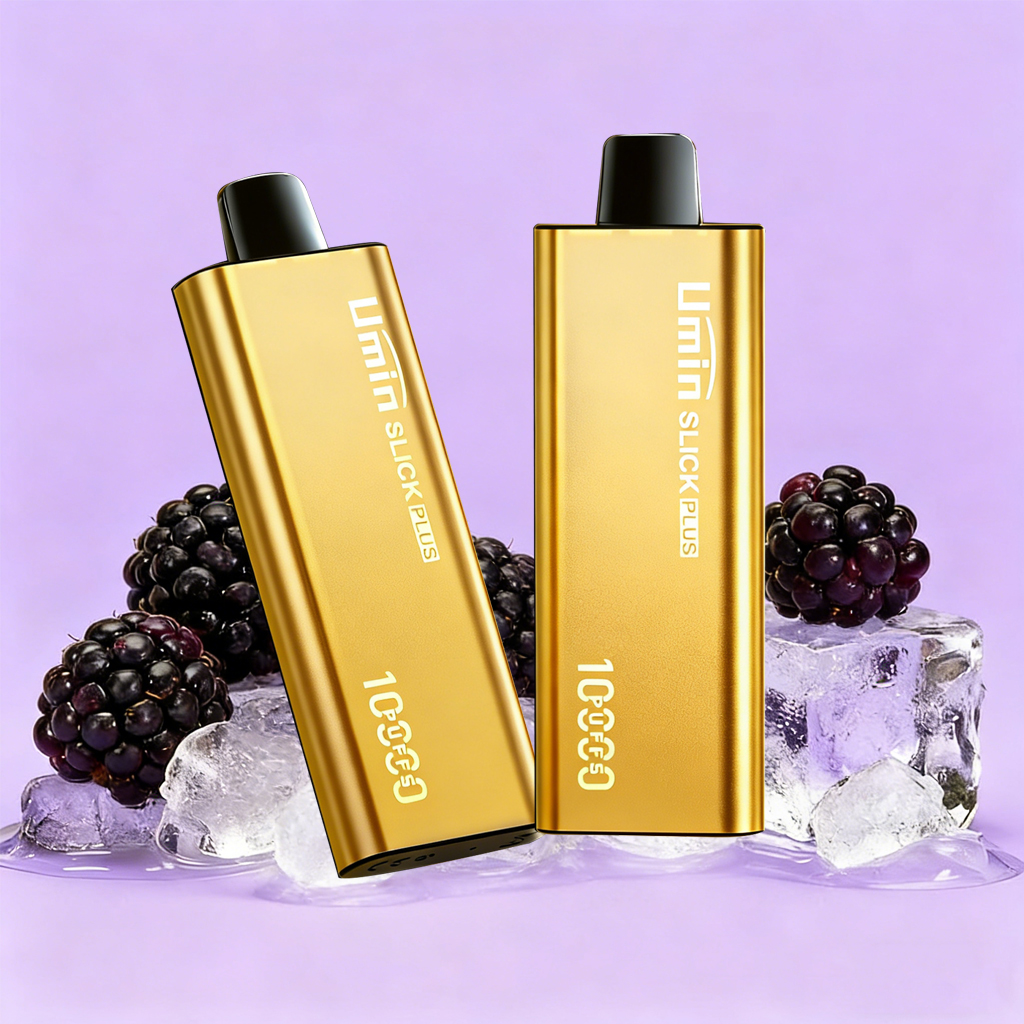
The picture is nuanced. Ultra-high-capacity disposables dramatically reduce the physical quantity of batteries thrown away compared to small single-use units — trading fifty simple devices for one advanced one. Yet they still carry a far larger environmental burden than refillable pod systems, where the only recurring waste is a small metal coil or a replaceable plastic cartridge. Mid-capacity disposables — such as the UMIN SLICKPLUS 10000 Puffs, which offers 2,700 mAh of battery life and a straightforward design — occupy a middle ground: they reduce device turnover relative to the smallest disposables while avoiding the heavy electronics burden of 30,000-puff flagships.
Why Recycling Disposable Vapes Is So Difficult
Many users assume that simply tossing a used vape into a recycling bin solves the problem. This is a serious misconception. Disposable e-cigarettes are classified as WEEE (Waste Electrical and Electronic Equipment) and fall under strict waste-management regulations. They cannot be processed through standard household recycling streams.
The core difficulty is the multi-material construction. To safely recycle a disposable vape, the lithium-ion battery must first be physically separated from the remaining components. In ultra-high-capacity devices where every part is tightly fitted, glued, and soldered together for durability and leak-proofing, this is extraordinarily labour-intensive.
For waste-processing facilities, hand-disassembling thousands of these devices is economically unviable. Mechanical shredding, meanwhile, carries a serious risk of lithium-battery ignition — and can release toxic nicotine vapour, heavy metals, and aldehydes directly into the work environment. The result: an overwhelming majority of used disposables end up in landfill, where their materials are lost forever and their toxic contents slowly leach into the ground.
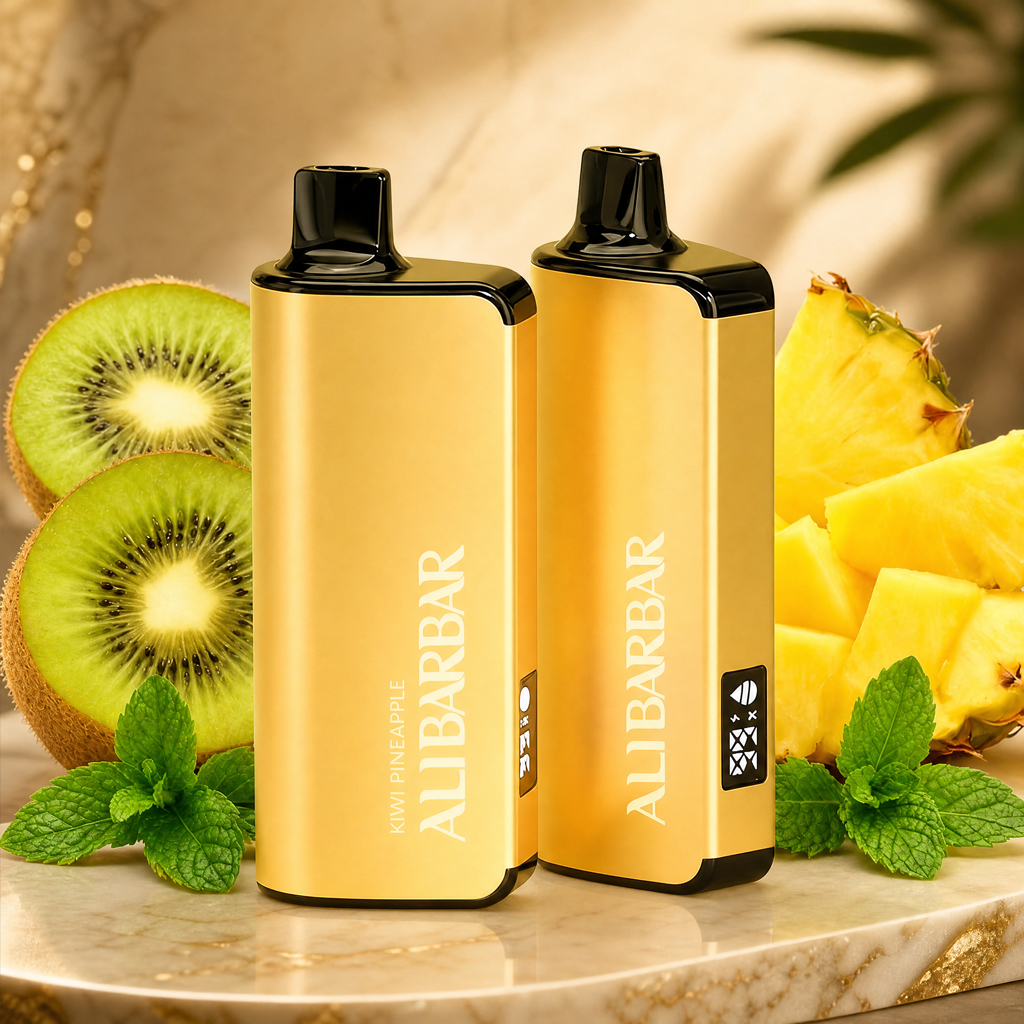
This challenge applies regardless of brand or puff count. Whether it is a 600-puff mini, a mid-range device like the ALIBARBAR INGOT 9000, or a screen-equipped 30,000-puff flagship, every vape containing a battery and residual e-liquid demands exactly the same level of responsible disposal.
How to Dispose of Your Used Vape Responsibly in Australia
If you choose to use disposable vaping products, you carry the responsibility for their end-of-life management. Under no circumstances should e-cigarettes be thrown into general waste or household recycling bins. Here is the correct disposal pathway to minimise environmental harm:
- Specialist vape retailers: Many dedicated vape shops in Australia accept used devices for responsible disposal. Some offer take-back programmes when you purchase a replacement device. Check with your local store.
- Battery recycling programmes: Australia operates B-cycle, the national battery recycling scheme. Drop-off points are available at major retailers including supermarkets, hardware stores, and electronics shops. Visit the B-cycle website to find your nearest collection point.
- Community e-waste collection events: Many local councils across Australia run regular e-waste drop-off days where residents can safely dispose of small electronic items including vapes.
- Household chemical clean-out events: Some councils offer dedicated collection days for items containing hazardous materials. E-cigarettes with residual e-liquid qualify for these services.
Before dropping off a device, tape over the mouthpiece and any exposed contacts with electrical tape to reduce the risk of short-circuiting. If the device is rechargeable and still powers on, discharge the battery as much as possible before disposal — a fully charged lithium cell poses a greater fire risk in transit and processing.
It is worth noting that some manufacturers of ultra-high-capacity devices have been criticised for failing to provide clear end-of-life instructions. Regardless of brand, every battery-containing e-cigarette requires proper e-waste handling. No manufacturer currently offers a practical at-home recycling solution for disposable vapes.
The Circular Economy and the Future of Vaping
Can the vaping industry become genuinely sustainable? The path forward lies in adopting circular-economy principles. Lessons from the broader consumer-electronics sector demonstrate that designing products for easy disassembly — known as Design for Recycling — is the crucial first step.
Deposit-return schemes, where consumers receive a discount on their next purchase in exchange for returning a used device, could dramatically increase the recovery rate of lithium batteries. The reclaimed lithium and cobalt can be fed back into manufacturing new cells, reducing demand for environmentally destructive open-pit mining. Several European countries are already piloting vape take-back programmes, and momentum is building for similar initiatives elsewhere.
For now, the most immediate action any adult vaper can take is simple: choose products with a clear disposal plan, and follow through on it. Even a well-designed mid-capacity disposable like the UMIN SLICKPLUS 10000 Puffs — which avoids the excess electronics of screen-equipped ultra-high-capacity competitors — still belongs in a battery recycling stream, not a kerbside bin.
The future of vaping is not about bigger tanks — it is about better material stewardship.
Conclusion: The Choice Is Yours
Ultra-high-puff-count disposable vapes represent an engineering marvel — stable performance, rich flavour delivery, and genuinely impressive longevity from a single unit. Yet that high performance comes with a correspondingly high responsibility. As an informed adult consumer, you must weigh the convenience against the full lifecycle cost.
If you are not prepared to meticulously and correctly dispose of electronic waste, the most environmentally sound choice is to transition to a refillable pod system. These preserve all the benefits of modern vaping while shrinking your personal carbon and plastic footprint to a fraction of what even the most advanced disposable generates. If you do choose a disposable — whether a mid-capacity device like the ALIBARBAR INGOT 9000 Puffs or any other — commit to the full disposal effort: locate your nearest B-cycle drop-off point and use it every time. The decision you make at the checkout has a direct impact on the environment that surrounds all of us, years into the future.
Product specifications
| #E5E7EB | 9,000 |
|---|---|
| #E5E7EB | 2,400 mAh, non-rechargeable |
| #E5E7EB | Mesh coil |
| #E5E7EB | True disposable - no charging, no refilling |
| #E5E7EB | 15+ options |
| #E5E7EB | A$ 49.90 - verify on the product page |
| Spec | INGOT 9000 | SLICKPLUS 10000 |
|---|---|---|
| Puff count | 9,000 | 10,000 |
| Battery | 2,400 mAh | 2,700 mAh |
| Coil | Mesh | Mesh |
| Device type | True disposable | True disposable |
| Flavour range | 15+ | 18+ |
| Price marker | A$ 49.90 | A$ 38.90 |
Frequently asked questions
What does this guide cover?
This article explains the practical points adult vapers ask about, with plain, useful detail. Check the product page for the latest specs and flavour availability.
How do I buy a genuine product?
Stick to authorised sellers, then check the seal and batch code on the packaging. Our authenticity guide covers verifying a genuine ALIBARBAR or UMIN device.
What should I know before using it?
Read the product instructions, store it well, and dispose of it responsibly. If you are new to vaping, read our beginner guides first.
Where are nicotine vapes supplied in Australia?
Nicotine vaping products are a regulated therapeutic good supplied to adults through pharmacies and authorised channels under the TGA framework. Laws vary by state and change often, so check current rules where you live.

 Telegram
 Whatsapp